Fruit, nectar, insects, and smaller vertebrates such as smaller geckos
Reproduction
Females lay 2 eggs once a month for several months out of the year and can pair bond
predators
Birds and larger geckos
natural defenses
Vocalizations
About the Species
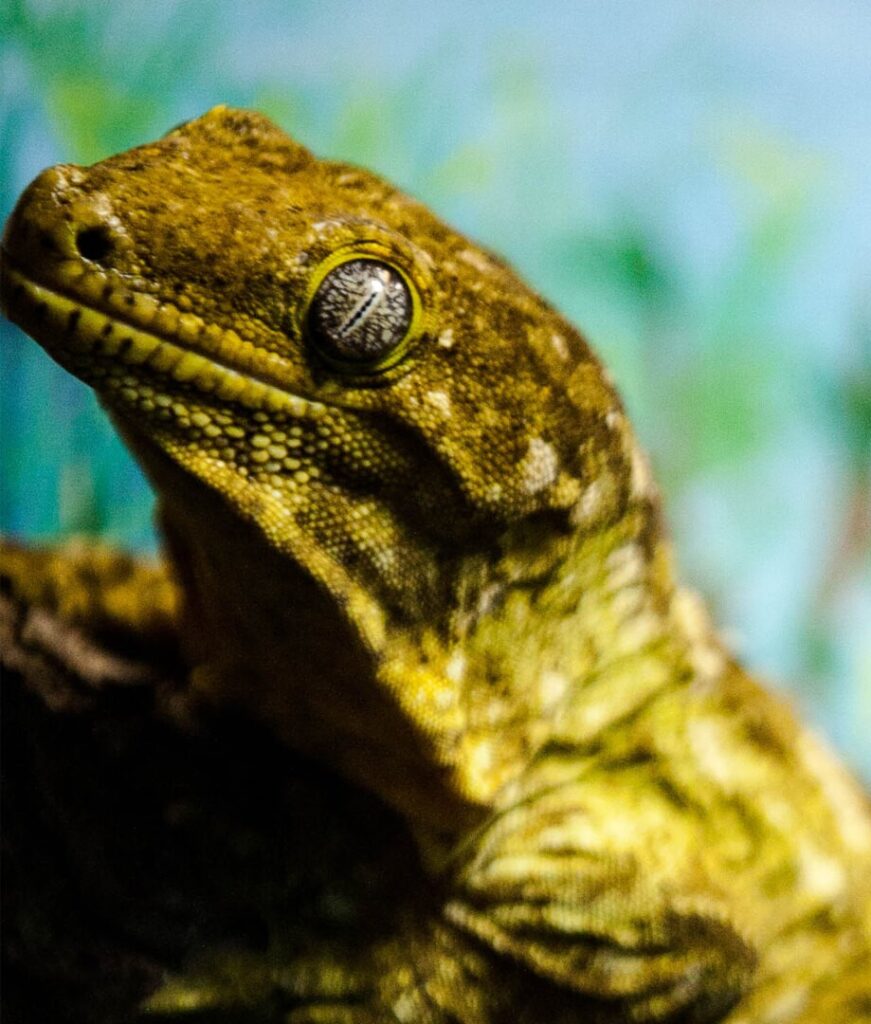
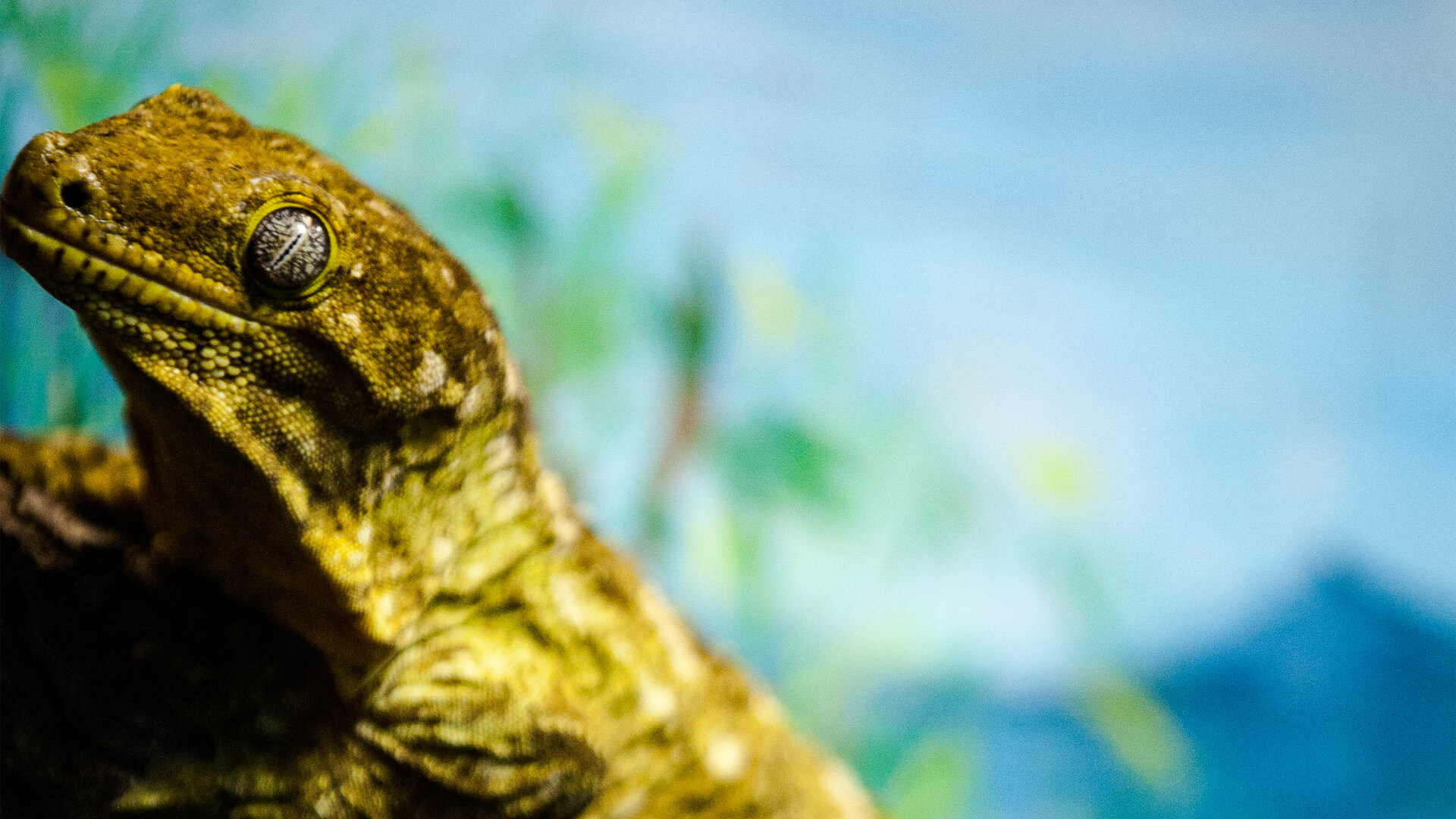
“DEVIL IN THE TREES” The world’s largest gecko, this species uses a unique language of whistles, chirps, and growls to communicate. The loud noise they make has led locals to call them the “devil in the trees.”
This species is the largest gecko in the world.
On the island of New Caledonia, this species can get up to 43 centimeters and weigh 200–300 grams. On surrounding smaller islands, it may only get to be 32 centimeters; but that’s still pretty large. The males usually hang out on the lower branches and defend their territories from other males, while the females spend most of their time on the branches above. Sleeping during the day, these nocturnal geckos come out to forage at night for anything they can eat. They enjoy insects, small animals, fruit and even flowers.
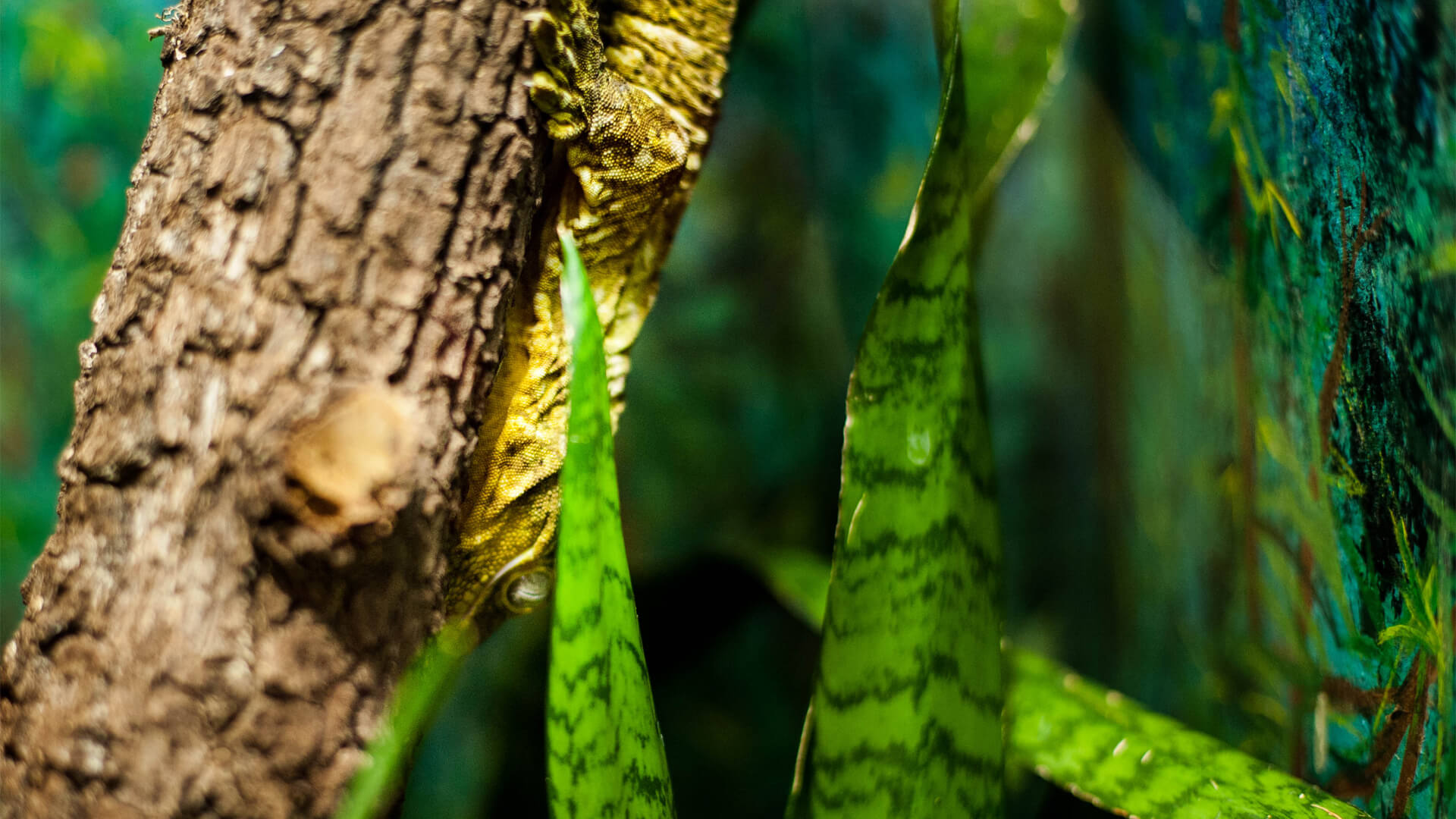
They are great at navigating branches and leaves to reach food and hiding places, using their Velcro-like toe pads, claws and large scales on the tail to effortlessly grip the trees. The green, brown and grey coloration of this gecko helps this species camouflage in the forest canopy. Geckos can hang on with their large toe pads, but unlike others, this gecko has claws and specialized scales on its tail to help in the trees.
SCIENTIFIC NAME
Rhacodactylus leachianus
Fun Fact
Loose folds of skin make this large gecko look like it still has growing room.